Showing posts with label Caribbean. Show all posts

Tuesday, 21 June 2011

6th International Conference of Caribbean Women's Writing: Comparative Critical Conversations


Comparative Critical Conversations

Friday 24 and Saturday 25 June 2011

Goldsmiths, University of London

‘Comparative Critical Conversations’ is an international 2-day conference that aims to reconfigure methodologies through comparative responses to the literature in a bid to further understand the deep and complex relations between texts that derive from a culture variously described as mimetic, hybrid, fragmented, syncretic and so on.Caribbean Women’s Literature as a body of work has become rooted in the region and across the diaspora. As a result, critics and teachers engaged in discovering, interpreting and disseminating the study of the texts have sought and found various discursive spaces from which to explore its distinctive aesthetics and particular complexities. The resulting transition from silence and absence to differentiated presence has opened a range of questions which this conference wishes to address. Centrally, we ask: how might the readings of Caribbean Women’s literature, alongside other ‘minority’ and ‘canonical’ texts within given national literatures produce perspectives that might re-invigorate as well as re-address contemporary critical processes?
Guest Speakers include Marlene Nourbese Philip
Conference Programme: Here

Thursday, 3 February 2011

A Giant Falls


Caribbean theorist, poet and novelist, Edouard Glissant has passed away today in Paris at the age of 82. He had been ill for a long time, but his death comes as a sad and sudden shock to me. I never knew him personally, but I have seen him speak and I know his work. His name is synonymous with contemporary Caribbean studies. This is a HUGE loss. 


Kevin Meehan's obituary from Le Monde:
Eloquent defender of diversity and métissage, the great Caribbean writer Edouard Glissant died on February 3 in Paris, at the age of 82. Poet, novelist, essayist, playwright, thinker, [and exponent of the concept of] creolization, he was born in Sainte-Marie (Martinique) on September 21, 1928 and conducted studies in Philosophy and Ethnology in Paris.
His success upon winning the Prix Renaudot in 1958 for his novel La Lézarde made the general public aware of this intellectual, who never separated his literary creation from a militant reflection. Influenced by the philosophy of Gilles Deleuze and Félix Guattari, he construed the history and geography of the Caribbean politically, demonstrating his revolt against racisms of any type and evoking the indelible mark of slavery on the relationship between France and Africa and all overseas territories.
Opposing any imposed systems and any rejection of the other, Edouard Glissant has been champion of métissage and exchange, formulating in his essays gathered in the “Poétique” series his theses on Philosophie de la relation [philosophy of relation] andPoétique du divers the [poetics of the diverse]. He refused to be constrained by single genre, moving constantly between the novel, essay, and poetry, even within a single work.
Novels Directed towards the Imaginary
Edouard Glissant, who shared at once a respectful and conflicting relationship with Aimé Césaire, the other great personality of the Caribbean world, also expressed his concern for literary parentage, through writers and “disciples” [I would rather translate this as supporting scholars] such as Patrick Chamoiseau, Raphaël Confiant, or Ernest Pépin.
His novels, from Quatrième siècle (Seuil 1965) to Ormerod (Gallimard 2003), are geared towards a mythical and imaginary world, far from any naturalism, but also imbued with picturesque elements specific to certain Caribbean novelists.
After having created a center for research and teaching in Martinique, as well as a review named Acoma, Edouard Glissant founded in Paris the Institut du Tout-monde, aimed at putting into practice his humanistic principles and to allowing for the dissemination of “the extraordinary diversity of the imaginaries of the people.”

Friday, 12 November 2010

The Cool Ruler

Gregory Isaacs 
Son of Judah
Born 15 July 1959, passed 26 October 2010 and to be laid to rest 20 November 2010.
On the 10th of November was a tribute to Gregory Isaacs at a church in Harrow Weald, London after which his body was flown back home to Kingston, Jamaica. He is to be given a state funeral and deservedly so, for his contribution to reggae music and as a lifelong ambassador of Jamaica. In my country, state funerals are the privilege of political figures who fought on the side of the ruling party, cultural contribution matters nought. Still, fare thee well Cool Ruler thank you  for the music, skank sessions downtown and late nights ekasi. 
Night Nurse was legendary.
(UK massive check KissFM for a nice David Rodigan tribute from a few weeks ago, hope it's still there.)

Sunday, 17 October 2010

Black History Month


I 
just 
remembered

A 
time 
when
 I 
am 
just
 black
Just 
one
 month 
this year.


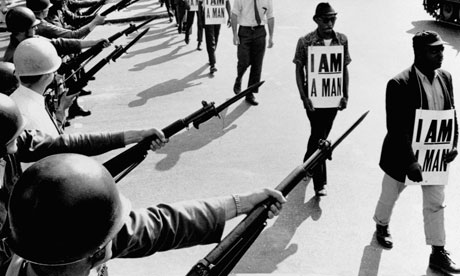
...I am a black man 
throughout all the days of the year. 
 Please don’t honour me for just 31 days of the year.
Honour me every day and in every way. 


Stephen Lawrence, stabbed to death for being black
Please don’t clutch your handbag 
when you see me walking 
towards you 
or cross the street just to avoid me. 
It’s alright to make eye contact, nod or even acknowledge my presence. 
I’m probably headed to or back from work 
when we meet…
matter of fact
 the other day I was off to a café with a good book in hand. 


Just 
so
 you
 know, 
I 
want
 absolutely
 nothing
 from 
you 
except 
a little respect 
all the days of the year.

Happy
....to those who still believe 
that one month 
is all we deserve.
Aluta Continua...


by
SirNigel
The first verse of this is a haiku by Sir Nigel (www.sirnige.com) and the rest are his words, I felt they sounded poetic so with his permission, I re-arranged his words into a poem. 
copyright: sirnige
All images jacked from Google, too many to do fotocred.

Friday, 15 October 2010

postcard from miami...

Miami, US: A man has glitter applied as he prepares to take part in the Miami Broward One carnival. 
The event celebrates Caribbean culture.
foto & caption cred: Lynne Sladky/AP& TheGuardian

Sunday, 29 August 2010

Notting Hill Carnival

The annual Notting Hill Carnival takes place this Sunday and Monday in West London. Carnival was originally staged in 1959 as a response to the state of race relations in Britain at that time. A decade earlier immigrants from the Caribbean began to arrive in large numbers to fill post-war labour shortages, but this caused resentment amongst some white Britons. Throughout the 1950s white racists and West Indian immigrants clashed, with riots taking place in Notting Hill for four days and nights during the August Bank Holiday weekend in 1958.
In response, Claudia Jones, a Trindad-born, New York-raised black activist and political campaigner, decided to organise a festival through which white and black Britons could understand each other’s cultures. Originally called Mardi Gras and staged in St Pancras Town Hall, the event moved to the streets of Notting Hill in 1964.
Carnival showcases the music and performance culture of the Caribbean, and in particular that of Trinidad & Tobago. Local African-Caribbean groups form carnival bands and play mas (or masquerade) through the streets of Notting Hill, accompanied by music...Claudia Jones died in 1964 but her work in creating greater understanding between native and immigrant cultures in Britain was a resounding success. Carnival is now one of the biggest events held in Europe, attracting more than a million visitors each year.

Words from Postal Heritage


'A people's art is the genesis of their freedom.'
Claudia Jones

Wednesday, 2 June 2010

The Poetics & Politics of Relation


fisttap Dollarbrand for link to the video

I believe that Relation is the moment when we realise that there is a definite quantity of all the differences in the world. Just as scientists say that the universe consists of a finite quantity of atoms, and that it doesn’t change – well, I say that Relation is made up of all the differences in the world and that we shouldn’t forget a single one of them, even the smallest. If you forget the tiniest difference in the world, well, Relation is no longer Relation.
Now, what do we do when we believe this? We call into question, in a formal manner, the idea of the universal. The universal is a sublimation, an abstraction that enables us to forget small differences; we drift upon the universal and forget these small differences, and Relation is wonderful because it doesn’t allow us to do that. There is no such thing as a Relation made up of big differences. Relation is total; otherwise it’s not Relation. So that’s why I prefer the notion of Relation to the notion of the universal.
....we were talking about what’s specific in the definition of the Other. Whether in the Francophone, Anglophone, Arab, Chinese, Japanese world, what’s specific in the definition of the Other is that this Other is not just considered different. The Other is considered as contrary. Now, in the world, there is no contrary.
The dialectic of differences is something I agree with, but not the dialectic of contraries, because the dialectic of contraries assumes that there’s a truth over here, and its contrary over there. Now I don’t believe there is a truth...
nothing is true and everything is alive,
nothing is absolutely true,
meaning [t]here isn’t one absolute truth, but truths. Everything is alive;
everything is a Relation of differences, not contraries, but differences.

Edouard Glissant in Conversation with Manthia Diawara