Showing posts with label Diasporic Relations. Show all posts

Tuesday, 21 June 2011

6th International Conference of Caribbean Women's Writing: Comparative Critical Conversations


Comparative Critical Conversations

Friday 24 and Saturday 25 June 2011

Goldsmiths, University of London

‘Comparative Critical Conversations’ is an international 2-day conference that aims to reconfigure methodologies through comparative responses to the literature in a bid to further understand the deep and complex relations between texts that derive from a culture variously described as mimetic, hybrid, fragmented, syncretic and so on.Caribbean Women’s Literature as a body of work has become rooted in the region and across the diaspora. As a result, critics and teachers engaged in discovering, interpreting and disseminating the study of the texts have sought and found various discursive spaces from which to explore its distinctive aesthetics and particular complexities. The resulting transition from silence and absence to differentiated presence has opened a range of questions which this conference wishes to address. Centrally, we ask: how might the readings of Caribbean Women’s literature, alongside other ‘minority’ and ‘canonical’ texts within given national literatures produce perspectives that might re-invigorate as well as re-address contemporary critical processes?
Guest Speakers include Marlene Nourbese Philip
Conference Programme: Here

Friday, 3 June 2011

Blogging the Caine Prize: Hitting Budapest

As I explained before I'm co-blogging Caine Prize for African Writing  (read more here) and every Friday we'll be reading one of the five short-listed  short-stories up till the winner is announced on 11 July. First up is "Hitting Budapest”  by NoViolet Mkha Bulawayo:


I'm really happy that NoViolet was nominated for the Caine Prize because a. she's a Zimbabwean b. she's a blogger and most importantly, c. I've read some of her stories and they're alright and so I expected the story chosen for the Caine Prize to wow me. Unfortunately it didn't.

If there is a very,very broad genre of 'new writing' that now exists as a breakaway genre of post-independent Zimbabwean Literature, then this story belongs to that category of fiction. If in very simplistic terms 'new writing' can be described as the writing of the present socio-political condition(s) in Zimbabwe rather than the condition(s) of colonialism and the liberation war which has been the focus for many of Zimbabwe's well-known writers like the late Yvonne Vera (Butterfly Burning), the late, great Dambudzo Marechera (House of Hunger) and Tsitsi Dangarembga (Nervous Conditions). Violence, social breakdown and political strife with characters displaced inside and outside of Zimbabwe.

jacked from the dailymail

'Hitting Budapest' is the story of six children's journey to a part called Budapest with 'big houses with the graveled yards and tall fences and durawalls and flowers and green trees, heavy with fruit' which contrasts the shanty town, Paradise, where they live. Two things struck me during my reading of this story; the woman from London and the names. I see an very uncomfortable parallel between the woman from London and the author. One scene reads:

"Do you guys mind if I take a picture?" 
We do not answer because we are not used to adults asking us anything; we just look at the woman take a few steps back, at her fierce hair, at her skirt that sweeps the ground when she walks, her pretty peeking feet, at her big jewelry, at her large eyes, at her smooth brown skin that doesn’t even have a scar to show she is a living person, at the earring on her nose, at her T-shirt that says “Save Darfur.”  
“Come on, say cheese, say cheese, cheese, cheeeeeeeese,” the woman enthuses, and everyone says “cheese.” 
Yes, she has the classic 'how to mock poverty porn' scene down to a tee, but how different is the author from the woman? She has a story published in the Boston Review which plays on the stereotypes of Zimbabwe as poverty-stricken, desolate place - with both good and bad effects as has been explored in great detail by ZunguZungu. What are Zimbabwean readers, who think critically about representation, to make of a story that is cynical of 'Save Darfur' and yet Budapest (presumably Bulawayo - the second largest city in Zimbabwe) is depicted as a near uninhabited, basket-case? And what are readers of African fiction to make of Caine Prize as a literary institution and it's consumption of Africa?

Moving on... 


Names have an important function in this story; for irony; the naming of the shanty town, Paradise - to amuse and shock; Bastard is the name of one of the characters, a name that can be read as symbolic of the socio-economic situation faced by these seemingly parent-less children. It's interesting that apart from Chipo (meaning gift in Shona), none of the children have 'standard names' - Stina means brick in colloquial Ndebele, is most probably short for something else like Sbho which on its own could mean 'let's see' and in the story everyone sees Sbho because she stands out, she is 'pretty, prettier than all of us here, prettier than all the children in Paradise.' 

Godknows, Darling and Bastard are 'dictionary names' - as in names made from words, we have a fair few Godknows in Zimbabwe, but you'd be hard pressed to find a Bastard and Darling (Darlington yes for a boy, but Darling is rare). So what's my interest in these names?
There's a systematic assignation of names to indicate behaviors and social situations which is as common in African writing, as in real life. For a reader who is not as familiar with Zimbabwe this might add a different dimension to the story and might seem like a clever play on names and meanings, but for someone who is knowledgeable, the obviousness of the names adds to the banality of the story and it's troubling representation of Zimbabwe.* (*updated on 4/06/11) For example ten year old Chipo is pregnant and they joke that she could have been impregnated by the teacher Mr Gono i.e Gideon Gono the Governor of the Reserve Bank, famous for slashing the zeros from the Zimbabwe dollar as an inflation remedy. Same goes for Bastard and Darling - antonyms as dictionary names, and rivals as story characters so much so that the protagonist, Darling imagines beating Bastard to a pulp:
I think about turning right around and beating Bastard up for saying that about my America. I would slap him, butt him on his big forehead, and then slam my fist into his mouth and make him spit his teeth. I would pound his stomach until he vomited all the guavas he has eaten, pin him to the ground. I would jab my knee into his back, fold his hands behind him and then pull his head back till he begged for his life. But I shut up and walk away. I know he is just jealous. Because he has nobody in America. Because Aunt Fostalina is not his aunt. Because he is Bastard and I am Darling.
No prizes for guessing what that fantasy could mean in political reality. Because its a nice action scene and because it reminds me of the fight between the siblings of Nervous Conditions by Tsitsi Dangarembga, this for me is probably the best bit for me in this whole story.  

As this is a collective reading and blogging exercise, checkout what other bloggers have to say about this story:

Wednesday, 1 June 2011

Congo: Two Stories, Two Lives


click cc for subtitles
fisttap afroeurope & tomdevriendt

Roland Gust was born to a Congolese mother and a Belgian father. He grew up in Congo, believing he was White. That is, until his family decided to return to Belgium when he was twelve. Twenty years later, he made a film about his life: The Belgian Colour Bar.

As long as I kept it to myself, there was no problem. Not for the outer world, that is. I remained Roland, the perfectly integrated coloured. I didn’t want to come across as a frustrated black man who was ungrateful for what Belgium offered him. I didn’t want to be expelled after so many years of trying, because I was begging for a recognition of my Belgian identity. I had to serve Belgium and remain silent.After all those years of absolute and blind dedication to the country of Belgium I have now crowned myself a Belgian. I have earned my place in Belgium and no longer need the Belgian’s approval to be a Belgian. As a Belgian I make use of my freedom of speech to tell my Belgian story. I no longer lie awake about the potential repercussions following my critical discourse about Belgium and the Belgian identity.

- From 5 Questions for Roland Gust by Tom Devriendt from Africa is a Country - The Belgian Color Bar


fisttap @telamigo (tomdevriendt)
Kwa Heri Mandima (kwaheri means goodbye in Swahili and Mandima is a village/growth point in DRC) by Robert Jan-Lacombe is a short, biographical exploration of his early life in the Congo. He never expected to say goodbye, but conflict made it so. Like The Color Bar above, this film explores similar issues of identity, belonging and non-belonging, race, memory, migration and displacement, albeit from a different perspective. It provides a good juxtaposition.

Tuesday, 10 May 2011

New Navy


New Navy are a indy band based in Australia and this is their debut song 'Zimbabwe'. The video  was released yesterday and their album, 'Uluwatu' is due to be released at the end of May. Having previously reached number one on the Tripple J Unearthed charts (discovers new bands in Australia) with their song Animals, this track looks set to take their name beyond Australia. New Navy have also performed with or opened for Cassette Kids (Google them, plse!) and Wolfmother among many others. 

In DOPE Music WE Trust.

Friday, 6 May 2011

Shake the Dust


The amazing clip above is a preview from an upcoming documentary, “Shake the Dust which features hip hoppers from all over the world. Made by emerging film director Adam Sjoberg, the film tells the story of b-boys, and girls in poor communities from Uganda to Yemen to Haiti who all connect through the universal language of hip hop. Acknowledging the universality of music, Sjoberg writes of hip hop culture: ”
"although separated by cultural boundaries and individual struggles, are intrinsically tied to one another through their passion for break-dancing and hip-hop culture....“Shake the Dust” uses b-boying to show commonality and humanity in cultures that are affected by war, disease, and poverty. It seeks to paint a picture of the struggles the characters have– but only as a backdrop to the real story: one of hope and beauty."
Interestingly, there's a side story that developed out of making "Shake the Dust" in Yemen Sjoberg met up with some Somali hip hoppers who dropped some rhymes about the futility of war, their ancestry and forced migration.


For more on Yemen's b-boy crews, I recommend Tom Finn's article, on Sana'a's breakdancers. Apart from insight into how hip hop as universal livelihood and source of creativity for Yemen's youth, the different class mix and multi-cultural dancers stood out for me. The main group featured in this article is The Blast Boyz who are described as "a motley bunch of refugees and expatriates, harking from Canada, Tanzania, Iran, Somalia and America." This is an important thing to remember at a time when there's so much political focus on Yemen. It is often presented as a monocultural and monracial society and yet Yemen like many other Arab countries is visibly multicultural and thousands of years of interaction with countries on the Horn of Africa. Depending on what you believe, modern humans are said to have migrated out of Africa through Yemen and milleniums later, the Ethiopian Queen of Sheba (Makeda) ruled over the then south Arabia and parts of the East Africa. Presently there are at least 700 000 Somalis in Yemen as its one of the closest countries for people fleeing conflict or seeking a better life. Obviously, migrants are in the minority (23 million pop.), but they're some of the small everyday stories which are part of the current, mass anti-government protests which will hopefully topple Ali Abdullah Saleh. On the impact of the protests on hip hop and family life, Finn writes:
"Social stigma, the b-boys say, is the only thing stopping them from joining the ranks of protesters who have been camped outside Sana’a University for the past two months calling for Yemen’s ruler for the past thirty-three years, President Ali Abudallah Saleh, and his family to leave power. “My father would disown me, simple as that,” says Danny Al-Basry, another Iraqi considered one of the crew’s most talented members. “But if things get much worse here, I will have to join them.”
Like many others, the boys say they feel alienated by social expectations that are no longer achievable as a result of the deteriorating economic and political situation. For some of them, b-boying is not only a means of expression but also a vital way of escaping from these looming pressures as well as the monotony and tedium of everyday life in Yemen."

b-boy in yemen
fotocred: adam sjoberg
jacked from www.jonatascouto.com
fisttap @tomwfinn


Tuesday, 22 February 2011

About Those 'African Mercenaries', An Open Letter to Al Jazeera From Africa

Dear .......... (Insert name of media organisation and modify letter as you wish)


Dear Al Jazeera


I have decided to write this letter to you as you've been the channel I watch the most for informative coverage on events in the Middle East and North Africa. In many ways your coverage has been amazing and I sincerely applaud the unbelievably brave efforts of your journalists who had to work under very difficult conditions to cover events in North Africa. However I now write to you with concern at international media's coverage of events in Libya, particularly concerning 'African mercenaries'. I honestly don't have a problem with the term 'African mercenaries' because this is how Libyans probably refer to Black non-Libyans, but what bothers me is the way some of your tv anchors and field journalists continue to push this meme on air. For example on Sunday the anchor on Al Jazeera English, David (I didn't get his last name, he was an older man with an English accent hosting the news around 6 p.m GMT) said 'mercenaries are coming from Africa' ...but Libya is in Africa. As correction perhaps, the Al Jazeera website had an excellent Features article, 'In Search of an African Revolution' the very next day on Monday (21 Feb) addressing this very issue.


And yet your other journalists continue to refer to 'Black African mercenaries coming from Africa' (as with the 1p.m broadcast at the Egypt/Lybia border on 22 Feb with the courageous and brilliant Jamaal Elyshayyal) yet some of those mercenaries are also reportedly Arab and European. (RE: David Smith's column in Guardian UK) Understandably this may have been an unintentional oversight on the part of the news network as this is what Libyans on the ground are reporting, but I think continually pushing a singular narrative about a more complex story has the danger of reinforcing an African and Arab narrative that has an uncomfortable racial connotation to it. I am not accusing Al Jazeera of having a racial bias, far from it. I just feel its important for the network to be sensitive to how this issue plays out to an international audience of both Black Africans and Arabs when the full story is untold. 


Elsewhere, other Al Jazeera and international journalists who although tweeting in their personal capacity, tweet the news and again they repeat this 'mercenaries are coming from Africa' line. One has to wonder whether we're looking at the same map when we speak of Africa or is this some journo code-speak ordinary people are not privy to?


As reports are emerging, it seems to be that the 'mercenaries from Africa' are most likely from Chad, Niger, Nigeria, Tunisia and Guinea as well as South Africa and parts of Europe. So they are White, Arab, European and Black, not all Black Africans. They may not be from the Congo, maybe not from Somalia but almost certainly not Zimbabwe as some wild speculations claimed. Yes, there was no plane full of soldiers dispatched from Harare to Tripoli at 1 a.m (!) on Sunday morning - any well-educated Zimbabwean could have told these international journalists tweeting in their personal capacity that this 'witness account', as dubbed by Al Jazeera, was untrue. Of course AJE is only the messenger so you can't be blamed for what you can't verify and I don't blame you. But since this is an open letter I may as well post some info for other inquiring minds who'll stumble on my blog. For starters soldiers are not mercenaries, our history of mercenaries is mainly from the apartheid era, Mozambique's civil war and the Angolan war when White South Africans and White Zimbabweans (some of them were former Rhodesian soldiers) would use Zimbabwe as temporary base but they did not operate in Zimbabwe. Secondly today in Zimbabwe we have thugs (don't often use guns but often beat and rape) not mercenaries (skilled hit-men like Simon Mann (Equatorial Guinea plot)) that are busy with their own electoral campaign of violence, thirdly Zimbabwe's thugs* have no knowledge of Libyan terrain and finally Zimbabwe doesn't speak French. Sadly no amount of @'ing international journos on twitter could kill this rumor. But as untruths die in time, I sincerely hope that this untruth will die sooner rather than later. (see Smith's column)


Anyway about these mercenaries and Al Jazeera's role in coverage. As there have been suggestions that it is likely the 'African mercenaries' are from the above-mentioned African countries, I'd like to know why an investigative journalist couldn't be dispatched to these countries to find out how the mercenaries work - surely Chad, Tunisia and Niger are not as hostile to international journalists as Mummar Gadaffi's Libya. If not, could a Chadian Ambassador or Activist could be invited to Al Jazeera studios to share their view? How can the story of mercenaries be reported to the exclusion of Chad, yet Chad is the French and Arabic speaking nation where some of these hitmen are allegedly coming from?


It bears repeating that Chad is an Arab African nation. It is Libya's neighbor. As your coverage is mainly centered on the 'Arab World' its tempting to think that Chad is perhaps not Arab enough that it should be spoken of and not spoken to in news reports and analyses. I appreciate that this is a fast-developing story and there are many angles to cover, but the impact of events in Libya on security and political relations between these two countries cannot be so insignificant that it's not worthy of mention, can it? At the very least one would think, Idriss Deby must be having sleepless nights while the Arabs next door are revolting. He could very well be the next Arab dictator to go. Does the Chadian government not have an opinion on the fact that the Brotherly Leader, King of Kings of Africa is said to be using Sub-Saharan Arab Africans and Africans to kill North African Arabs? Oops I'm sorry, I meant Chadian gunmen are allegedly crossing the border to help murder protesting Libyans? And Niger? Is it too poor to mention? 0.12% of the people speak Arabic if that helps.


UNHCR is becoming increasingly concerned at the displacement and violence experienced by foreigners living in Libya, including the other one million plus legal and illegal migrants from different parts of Africa other than Egypt. In the interests of humanity, its only fair and right that Al Jazeera to report on the fate of these people as well as they have reported Egyptian, Turkish and Italian migrants returning from Libya. 


This isn't just an Arab story, its an African story and it's a World story too. It must be told as such, with its multi-layered, complex, tragic and heartwarming narratives including the all too-often forgotten voices of poor migrants and refugees of all hues, tongues, nationalities and faiths. 


Al Jazeera's code of ethics states that the organisation aims to: 

1. Adhere to the journalistic values of honesty, courage, fairness, balance, independence, credibility and diversity, giving no priority to commercial or political over professional consideration.
2. Endeavour to get to the truth and declare it in our dispatches, programmes and news bulletins unequivocally in a manner which leaves no doubt about its validity and accuracy.


To me, this suggests that Al Jazeera strives to be impartial, give a voice to the voiceless and empower people to hold their governments and institutions to account. As the media organisation is becoming a leading player in international affairs, Al Jazeera has the chance to re-shape political and social discourses of our time, it has the potential to shift the centers of power from the traditionally empowered to the historically marginalized. Given that Al Jazeera wields this potential influence to enable a plurality of voices to speak, as a viewer, I don't understand why the Libyan Uprising being covered from a largely singular perspective. I feel that the story is still told from a West v Middle East perspective. Granted it is thankfully being told from the Middle Eastern side, but the speakers still remain the same. You promise to uphold 'fairness, balance' so it's fair to ask, when will other voices be invited to speak on this matter? Here's a suggestion, just for a day, in between field reports, you could have ongoing satellite conversations with diplomats from the UN, AU and Arab League battling it out with Libyan activists and bloggers who want to know where the real help is for Libya is, rather than going through a never-ending list of London and Washington's political and financial experts. I think that would be an 'unequivocal' display of 'fair and balanced' ethics, non?


If the Arab League, the EU and United Nations are being interrogated for their role in stopping the carnage in Libya, then the AU should be in the spotlight too. Its shameful that they have been silent on this issue and yet they, under Article 4 of the Constitutive Act, have a humanitarian responsibility to intervene in the affairs of a member state of the African Union when a crime against humanity is committed. Its funny but sad and infuriating that Al Jazeera spends more time discussing what the Arab League must, can or will do yet it can only issue condemnations and suspensions of Libya. None of these things will stop the carnage. The African Union has a peace keeping force that could help Lybia, that is why John Kerry of the Obama administration suggested this tonight (at about 7 p.m GMT 22 Feb), but the Al Jazeera anchor and Libyan analyst in the studio glossed over this and went back to discussing the Arab League and UN.
The news broadcast then switched to gathering views from around the world and South America, North America and Europe all had opinions. Nothing from Africa. Nothing from Asia. I laughed out loud, but inside I died a little and it hurt a bit. Is the Africa beneath the Sahara that irrelevant? Have African leaders, diplomats and UN representatives not been asked? Perhaps your Africa news desk is aware that the African Heads of Missions (AU) might be meeting in South Africa today. If its taking place it would be great if one of your correspondents in S.A could ask senior AU figures about the possibility of sending Lybia some of the peacekeeping troops that are partly funded by Gadaffi. As an African member-state, this is Libya's security investment so the AU should be pressured to get in there and save Libyans from the terror of this mad man and his sons. Please don't let the AU escape from responsibility because it doesn't fit the 'Arab World Revolutions' narrative. Right now Libyan lives matter more than pondering about 'new pan-Arab uprisings' and decoding Hillary Clinton and William Hague's diplo-speak.


I honestly don't mean to offend, but I'm a frustrated viewer who enjoys Al Jazeera's coverage and believes that the network has the ability to be the champion of the people. All people. As an African I was raised to see to the Continent as a whole with all its differences, contradictions and multiple identities, not to the exclusion of others. We are all Africans. The countries below the (sometimes imaginary) Saharan line may be the North's poorer half, but we matter too. In solidarity, the Lybian, Egyptian and Tunisian struggles are mine too as a young-ish person who lives under an oppressive regime. Including the Sub-Saharan Africans in this conversation would only further the North Africans cause as both the AU like the Arab League is a mixed club of despots and liberals all of whom have a case to answer to oppressed peoples on the whole Continent.


You can see a slightly longer version of this letter posted on my blog. A number of people have read it, shared it on twitter and some people, North Africans included, have commented on the post. I have also shared it on Twitter and have gotten a positive response thus far. I hope that despite, my cheekiness you will address my concerns. You may perhaps take comfort in knowing that I'm not singling out Al Jazeera, it's an across the board progressive media non-engagement with Africa as a whole and I will be writing open letters to the few revolutionary-inclined print media organisations that I've relied on for coverage as well.

I look forward to receiving a response from you regarding the concerns I have raised.

Thank you for reading my letter.

Yours Sincerely

A. Viewer
*'Zimbabwe's thugs' is not to imply that I am covering or defending for their brutality but a clumsy way of saying that their violence has been unleashed out on innocent, often defenceless people within the borders of Zimbabwe.
** This is the modified (supposedly better) version of a letter that I have now sent to AJE.

Thursday, 3 February 2011

A Giant Falls


Caribbean theorist, poet and novelist, Edouard Glissant has passed away today in Paris at the age of 82. He had been ill for a long time, but his death comes as a sad and sudden shock to me. I never knew him personally, but I have seen him speak and I know his work. His name is synonymous with contemporary Caribbean studies. This is a HUGE loss. 


Kevin Meehan's obituary from Le Monde:
Eloquent defender of diversity and métissage, the great Caribbean writer Edouard Glissant died on February 3 in Paris, at the age of 82. Poet, novelist, essayist, playwright, thinker, [and exponent of the concept of] creolization, he was born in Sainte-Marie (Martinique) on September 21, 1928 and conducted studies in Philosophy and Ethnology in Paris.
His success upon winning the Prix Renaudot in 1958 for his novel La Lézarde made the general public aware of this intellectual, who never separated his literary creation from a militant reflection. Influenced by the philosophy of Gilles Deleuze and Félix Guattari, he construed the history and geography of the Caribbean politically, demonstrating his revolt against racisms of any type and evoking the indelible mark of slavery on the relationship between France and Africa and all overseas territories.
Opposing any imposed systems and any rejection of the other, Edouard Glissant has been champion of métissage and exchange, formulating in his essays gathered in the “Poétique” series his theses on Philosophie de la relation [philosophy of relation] andPoétique du divers the [poetics of the diverse]. He refused to be constrained by single genre, moving constantly between the novel, essay, and poetry, even within a single work.
Novels Directed towards the Imaginary
Edouard Glissant, who shared at once a respectful and conflicting relationship with Aimé Césaire, the other great personality of the Caribbean world, also expressed his concern for literary parentage, through writers and “disciples” [I would rather translate this as supporting scholars] such as Patrick Chamoiseau, Raphaël Confiant, or Ernest Pépin.
His novels, from Quatrième siècle (Seuil 1965) to Ormerod (Gallimard 2003), are geared towards a mythical and imaginary world, far from any naturalism, but also imbued with picturesque elements specific to certain Caribbean novelists.
After having created a center for research and teaching in Martinique, as well as a review named Acoma, Edouard Glissant founded in Paris the Institut du Tout-monde, aimed at putting into practice his humanistic principles and to allowing for the dissemination of “the extraordinary diversity of the imaginaries of the people.”

Monday, 17 January 2011

Martin Luther King on Ghana


[Independent] Ghana has something to say to us. It says to us first that the oppressor never voluntarily gives freedom to the oppressed. You have work for it. Freedom is never given to anybody. Privileged classes never give up their privileges without strong resistance.
- Martin Luther King Jnr
(1957)


Sunday, 16 January 2011

Pieces Of Paper


Am feeling this song by Tinashé, right now...in an African so far from home, always gotta hustle to live kinda way.

Tuesday, 21 December 2010

The ZANE Appeal


This appeal brings to light how both Britain and Zimbabwe shamefully treat their people. In the case of Britain, people of British descent who fought for the Empire now live off of a small pension that the government refuses to increase yet WWII is such a big part of British national pride in their many monuments and numerous days of remembrance of battles, victories and bombings, it's embarassing that the country can't even take care of these 'veterans of Empire.' 10000 Whites, Coloureds and Blacks fought in World War II from colonial Zimbabwe - the largest contingent from Africa fighting for the British. While wars were fought in the name of Empire and continued to serve in the British army's outpost, only the Whites with British ancestry were entitled to pension which today is a pittance, while African soldiers received as little as £10 or nothing at all.

In the case of Zimbabwe, there is little care offered to the aged or ophaned of society so the vulnerable largely rely on family for care. Some of the elderly that ZANE takes care of had savings and like many other Zimbabweans, these funds were wiped out when the change to a multi-currency system was announced in the beginning of '09. 
The government's been so high-drunk on the struggle for land and anti-colonial (read regressive) economics that the multi-currency switch was done in a clumsy manner and no financial compensation was offered to those who had billions, trillions and quintillions locked up in the banks. A lot of people lost everything and had to start again. Even if the West was at fault and was ruthlessly plotting against our Cde Leader, no interference from the West has stopped our beloved Leader Ministers from profiting from the Chiadzwa diamonds or the land re-distribution exercise so there's nothing stopping the (anti-British) government from ensuring "indigenous" people don't die from cholera in infancy or poverty in old age.


Putting aside the ZANE project and Zimbabwe's social ills and Britain's failings for a loooong minute, there is also something to be said about this video. I found myself asking a million questions; can stories about poverty ever be told right? How do the tellers of these stories want them told? What do those to whom these stories belong want? Locating oneself as a Zimbabwean, how does one interpret an advert such as the one above? How different is it to what a British person sees? Does race or age matter? Does it matter that the appeal was not made for me but for a British person? (Presumably of White British ethnicity since the speaker talks of 'our relations' at the beginning)  Whose agenda does this story fit? 
I've no issues with this project, but it's how its filmed and how the narrative of Britain's long lost relations is constructed that lead me to ask the questions above. Sure neither Zimbabwean or Western media focusses much on the experiences of elderly Whites living in Zimbabwe so telling this story is a good thing, but something about the framing of this is problematic.

And to confirm there is something wrong with this video is the accompanying article which plays on the Mugabe bogeyman/White victim that is characteristic of 'I had a farm in Africa' discourse as Brett Davidson calls it. Take this, it attempts to give these people some dignity but seems to draw attention to other issues:
"Many have had their homes and farms taken from them. With great dignity but little to eat, they are barely surviving."
Sure it's a charity plug, I get that, but tugging at the heartstrings by misrepresenting reality and reinforcing a one-dimensional image of starving Zimbabwe has to be questioned because reality tells a different story. How many is 'many' of the many impoverished elderly White folk who lost farms in 2000? Out of the 8 000 elderly people that this charity takes care of, there are not many. One, two hundred tops and even that is being quite generous, but since stories of land repossession dominate the headlines, dominance now translates to 'many' which implies a majority.
Here's a second example that draws on the stereotypes of lawless, corrupt Zimbabwe:
"Operating in Zimbabwe is difficult and dangerous. Money could easily go astray, but ZANE has an unblemished record. Not a single penny raised since 2002 has been lost to corruption. Its brave workers operate "under the radar", as Benyon puts it, dispensing money directly to those who need it most."
...Umm where is it deadly dangerous in urban Zimbabwe? Where most of the Black, Coloured and White elderly people helped by ZANE live? In the retirement homes and houses in the suburbs? No. In the ZANE offices in Zimbabwe? In Harare, Bulawayo, Kwekwe - in which city is it so dangerous for them in 2010? Honest question.

These may be small quibbles, considering the work that this charity has done, but as I'm in the business of critiquing and exploring how narratives are constructed through visual or written forms then it's perfectly legit to de-construct this. And hey I believe in fairness; if Bono gets ripped, so does everybody else!

Wednesday, 15 December 2010

We Want Peace


Emmanuel Jal - a former child soldier from Sudan made this song with the help of celebrities and activists to raise awareness about the January 9th, 2011 referendum in Sudan that will decide whether or not Southern Sudan should remain a part of Sudan.


 In his own words....
Picture
Emmanuel Jal
Musician. Author. Actor. Advocate.
My country is on the brink of war. On January 9, Southern Sudan will vote for its independence to be free from a government who has slaughtered and displaced our people for 43 years. The country is currently led by a regime bent on controlling oil resources.  80% of Sudan's oil fields are in the south, making it a prime battleground to displace our indigenous people.  Both north and south are preparing for war, leaving innocent people at grave risk of major human rights violations. The last civil war between North and South claimed over 2 million lives, including my own mother. I have firsthand experience as a war child, forced to fight in the conflict and torn from my family. The time to prevent another genocide is now. I have a written a new single called “We Want Peace”.  It is a call for peace, protection and justice for all in my land, and also for an end to conflicts affecting innocent people all around the world.  Thank you for joining me in my struggle.
You can help avert a genocide in Sudan by taking small steps that will make a big difference. By lobbying your government MPs and representatives, educating friends and family, planning a local event, or generating coverage in the media about the crisis, and spreading Emmanuel's message by downloading "We Want Peace",  you will help build the political power needed to prevent this conflict with diplomacy and not bloodshed.  Be a voice for the voiceless. Take Action.

If you prefer the non-celeb version:


Two Cents:
This has to be said: I posted the track because I liked it (warm fuzzy feel and that)  and because the proceeds from the song go to help those in need in Sudan, whether it's preventing boy soldiers or providing electoral aid or assistance to communities in need. The real effort to preventing genocide lies in the lobbying efforts of people or getting media attention for the situation in Sudan as Emmanuel Jal clearly states up top. Please don't confuse buying this single as an action that directly 'helps prevent genocide'. Buying a song or merchandise to fund peace projects doesn't prevent conflict from breaking out and seems a gross misunderstanding of the fact that political forces that create war and the solution to a clearly complex and volatile situation in Sudan cannot be reduced to buying a song or a t-shirt. Making peace requires direct engagement with warring factions and communities. Political settlements are not borne out of music singles or merchandise - not to say that protest music does not have it's place in conflict discourse, it does, but it's important to know precisely what role music plays. Let's be clear on that so don't go  buy the single in the belief that you're actually 'preventing genocide.'  None of that 'Save Darfur' feel-good campaign stuff please. There rant over, now you can go buy the single or donate knowing you're supporting the good work Emmanuel Jal is doing.


We Want Peace is now available on iTunes & Amazon (if you still mess with that.)

Monday, 6 December 2010

Worth A Thousand Words


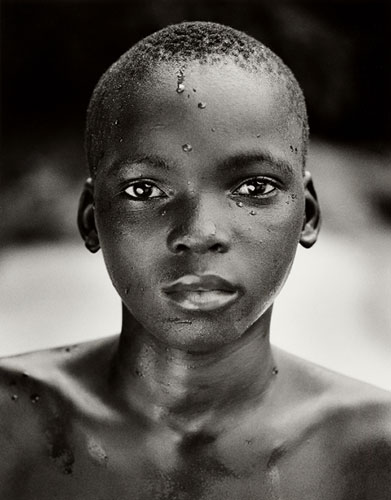
Boy, Haiti: Haiti is a tragic place in need of help. This image was taken before the recent earthquake. I hope this young boy was unharmed, although I can't help feeling that his life may be full of struggle


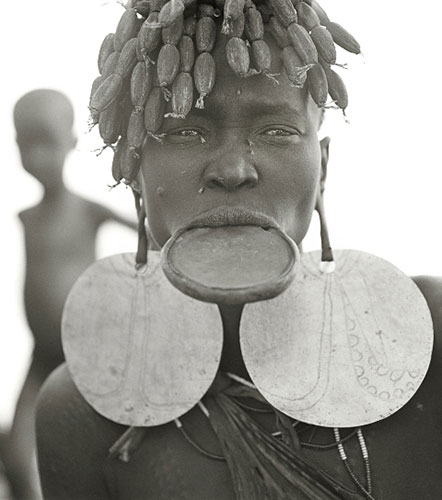
Mursi Woman and child, Ethiopia: It is traditional with the Mursi tribe for women to insert a clay dish in the lower lip from an early age. Around six to 12 months before marriage, the woman's lip is pierced by one of her kinswomen, usually at around the age of 15 to 18


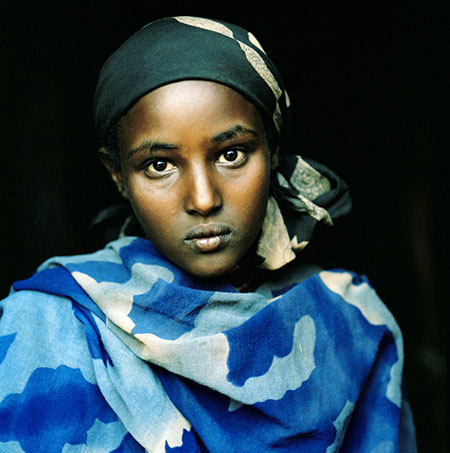
Hamer girl in the Omo Valley, Ethiopia: I spent three weeks journeying through Ethiopia to record the faces if its various tribes


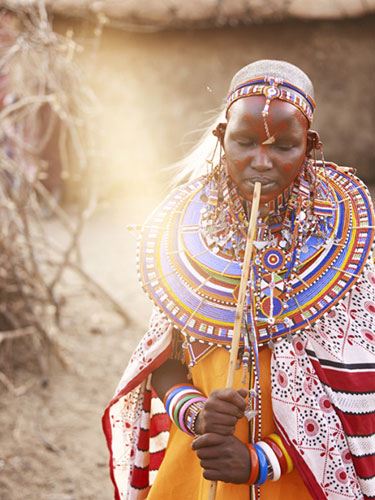
Maasai bride, Kenya: I stumbled across this young bride while photographing a wildlife story in the Amboseli National Park. This was a brief moment of calm reflection before the ceremony


Sacred Waterfall, India: Local people flock to stand beneath this sacred waterfall in Kerala. I love the serenity of these women lost in thought

From the series:  Travelling Light: an exhibition of recent works by Philip Lee Harvey showcased in London earlier this year.
All jacked from The Graun. 

Saturday, 4 December 2010

Dear ...


...from Saul Williams


Dear ....

As the media sways between reporting on the huge disservice Julian Assange has done to government secrecy and posting the secrets, as Interpol tries it's hardest to track him, as the American government places him on the top of their most wanted list, and as the barefoot bandit sits alone in a cell awaiting trial- I would like to take a moment to admit that these guys are pretty much heroes in my book... and I don't think I'm alone. The hacker is the digital dignitary of the i-generation. These are the same guys I seek out to help me burn hard to find dvds onto my hardrive, the same guys who help me get music off of my ipod and into my itunes. They save me from waiting lists and long lines at the genius bar and overpriced software, they help me replace lost and mistakenly deleted files, and if I had the savvy they did, if I could prove that the government was lying about the number of civilian casualties during a seven year war that I thought was wrong from the start, if I could help make this “Age of Transparency” a bit more transparent, I would gladly play my part. I'm not an anarchist. I shy away from most labels, yet register as a democrat when it means I can vote for someone I believe in. I've got my own set of contradictions. I'm also a musician and know damn well that I wouldn't like someone breaking into my computer and leaking my music before I decided it was time. But I have also celebrated the fact that I could now give away music for free by doing just that. And that freedom is the result of the hard work of people I do not know: programmers, engineers, fellow makers and creators, artists of the wire who dabble between worlds and understand codes where I see chaos. I respect them. Those that can capitalize on it and use it to their advantage are the pioneers of our time and those that would use it for the greater benefit of humanity, are the heroes.

Most of my heroes have been arrested. Many have stood on the wrong side of the law. And the law has not always stood for truth. The law has stood for control, dominance, and sometimes even manipulation. Law, at it's best, has served to protect. Yet it has also served as a means of restricting growth and has not always seemed to change at the rate of human consciousness. Some laws have some catching up to do. So do some governments. So do some people. And I'm sure that in some regards I am also one of those people. If I was in the military and believed I was protecting and serving my country by fighting in a war and some hacker gave away the correspondents to our barracks or fire-power, I imagine, I'd be pretty upset. Yet, I find it hard to be upset when I think the best support for our troops would be sending them home and enlisting them in college. If you want to help rebuild the infrastructure of a country send engineers, send teachers, build hospitals (no preachers).

But I digress. And who says I understand how to fight disingenuous governance, poverty or hate? I'm just saying I understand the importance of counterculture, of those who prefer boom over pop. Hardcore. Underground. The ones who dare to question and expose, who put their lives at risk, like soldiers fastened to their beliefs, but who fight alone or in small packs of the daring and courageous, Those who stand up and speak out even when the masses seem apathetically addicted to the status quo, which is probably good for business. And I'm not anti-good business. I'm just for new business models. And new fashion models, while you're at it. They don't have to be so skinny!

But the reason that I'm writing you Santa is because Kanye already rocked a red suit, I wanted to suggest a yellow cape, something with fringes, maybe a few feathers or ornaments. It's not like you have any connection to Jesus so you might as well change your shit up and get on some newness. The way I see it, you're another one of them do-gooders. You give kids something fun to dream about while we adults scramble the meaning of things. Things like the meaning of power, or the role of responsibility within it. Things like the power of the imagination and the beauty that can come about when you engage it. Anyway, it's nice to have someone to write to sometimes and I thought you might like a letter that wasn't asking you for anything. Do your thing, big guy, my son is counting on you.

My love to the Mrs.

xxx
shamelessly jacked from Saul Williams' Facebook Notes
4 December 2010.